
 English
 CN
CNContent
- 1 Why fabric selection defines autumn and winter jacket performance
- 2 Core performance criteria for autumn and winter jacket fabrics
- 3 Mapping fabric types to autumn and winter jacket categories
- 4 How to verify fabric quality during OEM sourcing
- 5 Material trends shaping autumn and winter jacket lines in 2026
- 6 From specification to production: building a smarter autumn and winter jacket supply chain
Your next autumn and winter jacket collection will succeed or fail at the textile level. A sleek design means nothing if the fabric leaks warmth, traps moisture, or allows down migration after 20 wear cycles. For OEM buyers and designers, the real conversation starts with functional fabric architecture—not just styling. This guide breaks down the material technologies that determine thermal efficiency, weather protection, and durability in cold-season outerwear.
Why fabric selection defines autumn and winter jacket performance
An autumn and winter jacket is a system, not a single layer. The outer shell, membrane, insulation, and lining each serve a distinct role. Buyers who treat fabric as an afterthought often face warranty claims, inconsistent sizing due to material instability, and missed price-point targets. In contrast, specifying performance textiles upfront cuts development time and reduces return rates. Three factors make fabric the hardest-working component: thermal regulation, moisture management, and mechanical durability. Get any of these wrong, and even the strongest brand story falls apart.
Core performance criteria for autumn and winter jacket fabrics
Warmth and downproof integrity: How 3D channel technology works
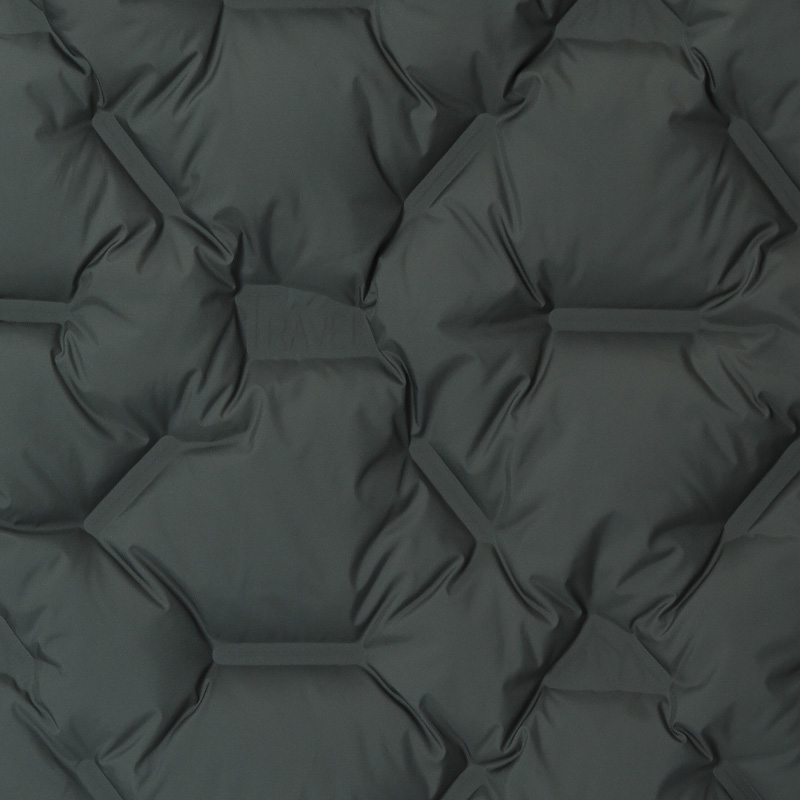
Traditional stitched-through baffles create cold spots where needles penetrate the fabric. 3D channel constructions solve this by forming a continuous three-dimensional grid that locks insulation in place without perforations. This design increases thermal efficiency by eliminating sewn-through lines and preventing down migration. For OEM buyers, the advantage is measurable: the same fill power delivers a higher clo value without adding weight. 3D channel down jacket fabric also maintains its loft after compression, which is critical for packable travel jackets and active winter wear. When evaluating this material, request a downproof test report according to ISO 105-A02 and check that seam-free channel bonding meets your expected end-use wash cycles.
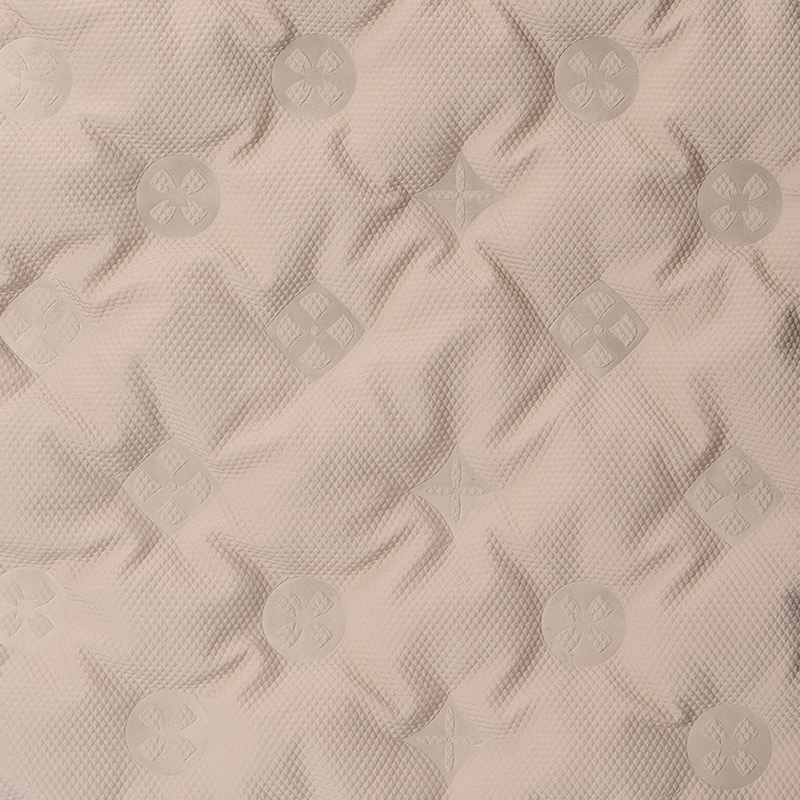 100% Polyester 3D Channel Down Sports Jacket Fabrics ManufacturersWujiang Fuhuang is China OEM 100% Polyester 3D Channel Down Sports Jacket Fabrics Manufacturers, Factory, Wholesale 100% Polyester 3D Cha...View Product →
Waterproofing and wind resistance: Membrane vs. coating comparison
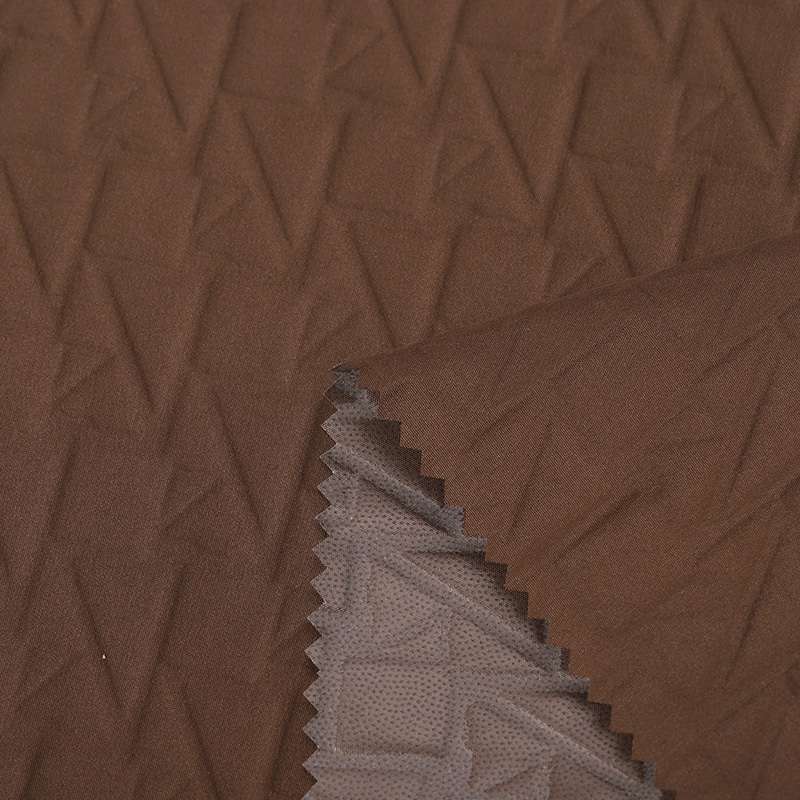
An autumn and winter jacket must stop wind-driven rain while allowing sweat vapor to escape. The market offers two main strategies: laminated membranes (TPU, PTFE, TPEE) and direct coatings (PU). Membranes typically deliver higher hydrostatic head ratings—often exceeding 10,000mm—with better breathability, while PU coatings prioritize cost efficiency and moderate water resistance. The real engineering question is layer count. A 2-layer construction bonds the membrane to the face fabric with a hanging liner, while a 3-layer design laminates the membrane directly to both the face and backer for a single cohesive package. 2-layer vs 3-layer waterproof fabric comparison helps teams decide based on intended activity level and garment weight budget. For performance-driven autumn and winter jacket lines, 3-layer laminated fabrics offer better durability and a cleaner interior. A strong example is Magic Crimple TPU jacket fabric, which combines a textured surface with a flexible TPU membrane to balance waterproof protection with mechanical stretch.
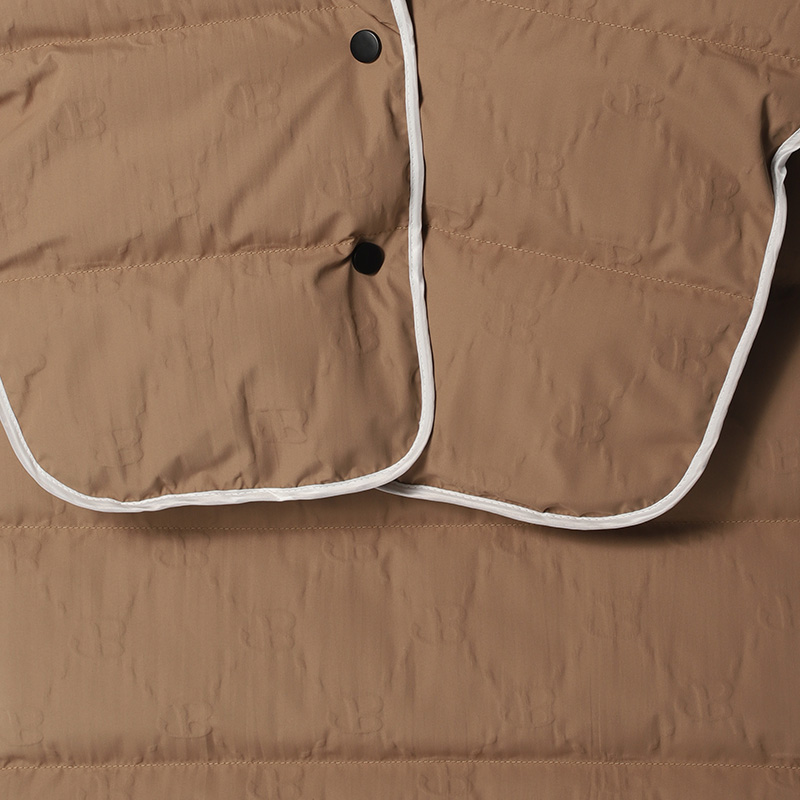 100% Polyester Magic Crimple Tpu Jacket Fabrics OEM ManufacturersWujiang Fuhuang is China OEM 100% Polyester Magic Crimple Tpu Jacket Fabrics Manufacturers, Factory, Wholesale 100% Polyester Magic Crimp...View Product →
Breathability and moisture vapor transfer: Reading MVT metrics
Warmth without breathability creates a microclimate that quickly becomes clammy—a common complaint in insulated jackets. Moisture vapor transmission rate (MVTR) defines how much sweat vapor passes through the fabric in 24 hours; values above 5,000 g/m²/24h generally indicate acceptable breathability for moderate activity. However, breathability requirements shift with the jacket’s intended use. A city parka can function well with lower MVTR and a focus on windproofing, while a ski-touring piece demands values above 10,000 g/m²/24h. OEM buyers should request MVTR data under both upright and inverted cup methods to understand real-world performance. TPU membranes tend to offer a better cost-to-breathability ratio than older PU coatings, but membrane thickness and pore density dictate the final numbers.
Mapping fabric types to autumn and winter jacket categories
Not every autumn and winter jacket needs the same material solution. The table below aligns key outerwear categories with the fabric technologies that serve them best.
| Jacket category | Primary demand | Recommended fabric technology | Key benefit for OEM buyers |
|---|---|---|---|
| Down-insulated parka | Maximum warmth, downproof | 3D channel down-proof with DWR | Reduces fill weight, eliminates cold spots |
| Urban commute shell | Waterproof, clean look | 2-layer TPU laminate with Oxford face | Balances cost and 10k+ mm waterproof rating |
| Active winter sports jacket | Breathability, stretch, weatherproof | 3-layer Magic Crimple TPU | High MVTR, mechanical flex, durable |
| Lightweight packable jacket | Low mass, decent insulation | Ultrathin 3D channel with aerogel additive | Maximum warmth-to-weight ratio |
These pairings come from field-level feedback with outerwear brands. More than one material can work, but starting with the correct textile category shortens sampling rounds.
How to verify fabric quality during OEM sourcing
Before committing to a bulk order for an autumn and winter jacket program, buyers should demand more than a spec sheet. The right testing protocol reveals whether the fabric will perform through a product’s lifecycle. Three non‑negotiable checks include:
- Hydrostatic head retention after 20 washes. Many fabrics hit 10,000mm out of the box but drop below 5,000mm after home laundering. Request data per ISO 811 after five-home-wash cycles.
- Bally flex test results for cold-crack resistance. For materials intended for sub‑zero wear, the Bally Flexometer at -20°C should show zero cracking after 100,000 cycles. This is especially critical for TPU films and lightweight nylons.
- Solvent-free lamination documentation. Regulatory pressure in the EU and US is shifting toward DMF‑free production. Verify that the supplier uses solvent-free or water‑based lamination processes. This not only simplifies compliance but also aligns the autumn and winter jacket line with retail sustainability requirements. For a deeper look at critical OEM questions, refer to the five‑point sourcing check.
Material trends shaping autumn and winter jacket lines in 2026
Three shifts are gaining traction among brands that plan 18‑month development cycles. First, mono‑material constructions that replace mixed‑polymer laminates with 100% polyester TPU films, enabling easier recycling at end of life. Second, aerogel‑enhanced insulation films that deliver measurable warmth benefits without increasing fabric thickness, discussed in detail via our aerogel structure guide. Third, the rise of graphene‑infused TPU membranes that combine antimicrobial properties with improved thermal conductivity. While still emerging, these technologies are already being specified for premium autumn and winter jacket collections. Buyers should consider how these innovations fit into a broader sustainability roadmap without sacrificing core performance metrics.
From specification to production: building a smarter autumn and winter jacket supply chain
The most reliable autumn and winter jacket programs treat fabric selection as a partnership, not a transaction. Specifying the right downproof channel, waterproof membrane, and breathability target early prevents costly redesigns and warranty exposure. For OEM teams, the path forward is straightforward: define the precise performance window, validate with real wash‑cycle data, and select materials that are already proven in your target category. The textile decisions made today will define which jackets sell through at full price—and which end up on clearance racks.