
 English
 CN
Content
- 1 The Short Answer Before the Detail
- 2 Nylon vs Polyester Jacket Fabric at a Glance
- 3 Strength, Weight and Abrasion
- 4 Moisture, Drying and Comfort Against the Skin
- 5 Water Repellency, Coatings and Lamination
- 6 Often It Is the Membrane, Not the Fiber
- 7 Hand Feel and the Details Buyers Notice
- 8 Down Jacket Shells and the Down-Proof Question
- 9 Cost, Availability and Sustainability
- 10 Questions Worth Asking Before You Commit
- 11 Our Take
Ask ten product developers whether nylon or polyester belongs in a jacket and you will get ten confident answers, and most of them will be right for the specific programme in mind. Both fibers are synthetic, both can be woven into a crisp shell, both can be laminated to a waterproof membrane, and both can be finished with a durable water repellent. The interesting question is not which one is better in general. It is which one suits your jacket, your budget, your factory and your end customer.
We have been coating and laminating fabrics in Suzhou for more than fifteen years, and both fibers run through the same machines every week. What follows is the comparison we would give a buyer sitting across the table from us, with the trade-offs stated plainly.
The Short Answer Before the Detail
If you want the lightest possible shell with the best strength-to-weight ratio, the smoothest hand and the deepest dye shades, nylon is usually the answer. If you want predictable performance at a friendlier price, faster drying, better UV stability and easier access to recycled feedstock, polyester usually wins.
In practice, most of a jacket's perceived quality comes from what surrounds the fiber rather than the fiber itself: yarn size, weave density, the membrane behind it, the backer, and the quality of the lamination. A well-built polyester shell will out-perform a poorly built nylon one every time.
- Choose nylon for premium lightweight shells, softshells, and pieces where hand feel and colour depth sell the garment.
- Choose polyester for value-driven programmes, linings, puffer shells, packs and gear where UV exposure and budget matter more than gram counts.
- Choose construction quality over fiber loyalty when the price gap is small.
Nylon vs Polyester Jacket Fabric at a Glance
The table below summarises how the two fibers usually behave in woven jacket fabrics of comparable construction. It is a starting point for a conversation with your mill, not a substitute for testing your actual article.
| Property | Nylon (Polyamide) | Polyester |
|---|---|---|
| Tensile and tear strength | Higher per unit weight | Good, generally below nylon |
| Abrasion resistance | Excellent | Very good |
| Moisture regain | Roughly 4 to 4.5 percent | Below 1 percent |
| Drying speed | Slower | Fast |
| UV and heat stability | Moderate | Good |
| Hand and drape | Smooth, cool, fluid | Crisp, dry, structured |
| Colour depth | Deep and bright | Good, slightly less saturated |
| Relative fiber cost | Higher | Lower |
| Common jacket roles | Premium lightweight shells, softshells | Value shells, linings, puffers, bags |
Strength, Weight and Abrasion
Gram for gram, nylon is the stronger of the two. A 20D nylon taffeta can carry a shell that would feel fragile in 20D polyester, which is why featherweight rain jackets and packable emergency layers so often specify polyamide. Nylon also recovers better after deformation, so it resists the bagging and sagging that shows up around elbows and pockets after a season of use.
Polyester is not weak, and it deserves credit for its flex and fold endurance. Where a jacket is folded into its own pocket repeatedly, hung on a hook, or stuffed into a backpack, polyester's resistance to flex fatigue can make it outlast a nylon that is mechanically abraded at the same points. For general outerwear, the practical difference in durability is smaller than the marketing suggests; for mountaineering shells and high-abrasion gear, nylon still has the edge.
Moisture, Drying and Comfort Against the Skin
This is where the two fibers part company most visibly. Nylon absorbs a few percent of its own weight in water vapour, which makes it feel cooler and slightly damper against the skin and slows drying after a wet day. Polyester absorbs almost nothing, so it sheds surface moisture quickly and feels dry soon after the rain stops.
Inside a laminated shell, though, that difference is partly masked. Comfort is driven mainly by the membrane's moisture vapour transmission, the backer or lining you choose, and how much air moves through the design. Where the fiber really shows through is in unlined windbreakers, summer shells and any jacket worn directly over a base layer in warm, humid conditions. That is why we often suggest a polyester plain weave for travel and commuter jackets, and nylon for cold-weather pieces where the shell is worn over insulation.
Water Repellency, Coatings and Lamination
Neither fiber is naturally waterproof, so both rely on the same toolkit: a durable water repellent on the face, then a coating or a laminated membrane behind it. PFAS-free C0 chemistry now works well on either substrate, though the pickup and cure conditions need adjusting because nylon's surface chemistry and polyester's differ. Adhesion is the point worth testing hardest, since a coating that passes on polyester will not automatically pass on nylon without a primer or a different pretreatment.
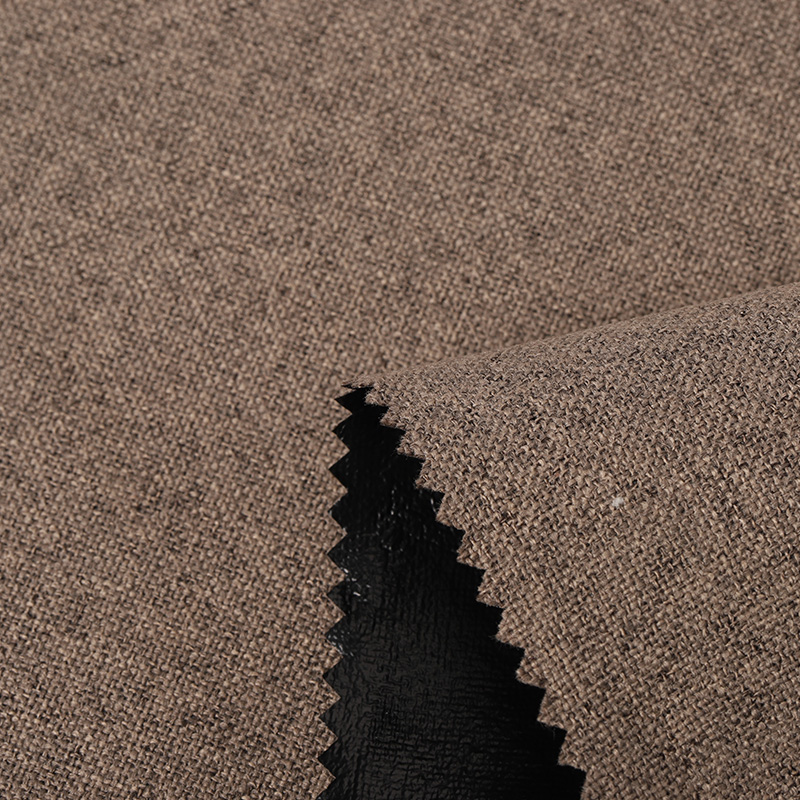 Customizable Two-Layer Waterproof Outdoor Functional FabricA customizable two-layer laminated fabric for outdoor waterproof applications, with selectable base fabrics, membranes, breathability and waterproof ratings to match jacket designs.View Product →
Our own two-layer constructions are built on both substrates, so we can usually keep the fiber your designer wants and adjust the film, adhesive and lamination route around it. If you are still deciding how many layers your jacket actually needs, our 2-layer vs 3-layer waterproof fabric guide walks through the structure and cost implications.
Often It Is the Membrane, Not the Fiber
Buyers sometimes blame the fiber for a jacket that feels clammy or stiff, when the real culprit is the film behind it. A hydrophilic TPU film, a microporous PTFE membrane and a PU coating all behave quite differently in the same nylon face fabric, and swapping the membrane can change the garment's character more than swapping the fiber ever would.
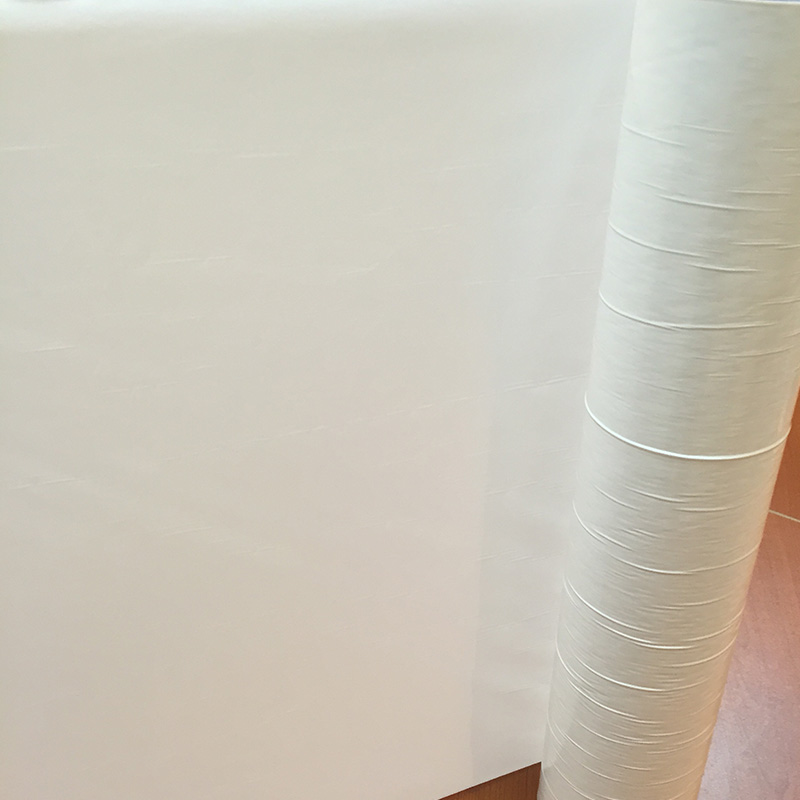 TPU, PU, PTFE and TPEE Functional MembranesCompare stocked TPU, PU, PTFE and TPEE films across breathability, waterproof ratings and blackout options to tune the same face fabric’s performance.View Product →
We hold TPU, PU, PTFE and TPEE films in stock, which means a fiber decision does not lock you into a single performance level. It also means we can laminate the same nylon shell three ways and let you feel the difference in the sample room rather than argue about it on paper.
Hand Feel and the Details Buyers Notice
Nylon has a cooler, smoother, slightly silkier touch and takes dye deeply, so navy reads as true navy and blacks stay rich. Polyester feels drier and crisper, holds a sharper crease, and can look a little more papery in very light weights. Static in dry winter air is more noticeable on polyester, and pilling is more of a risk in spun or brushed constructions than in filament ones.
Sound matters more than people admit. Neither fiber is silent, but tighter constructions and softer finishes reduce the rustle that makes a jacket feel cheap in a shop. When a customer sends us a competitor's sample and asks for that exact hand, we usually find the answer in yarn size, weave density and calendar finish rather than in the polymer itself.
Down Jacket Shells and the Down-Proof Question
For puffers, the fiber question comes second to down-proofing. Fine polyester filament in a dense weave has been the workhorse here for decades because it is economical, stable and easy to calendar. Nylon brings a softer hand and better strength at very low weights, which is why premium ultralight down pieces lean that way.
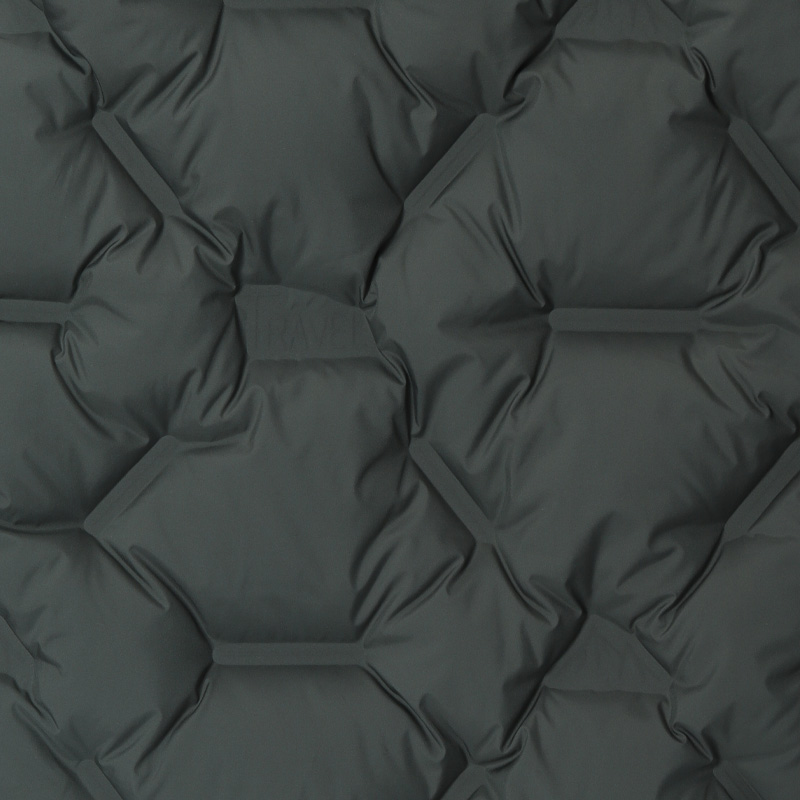
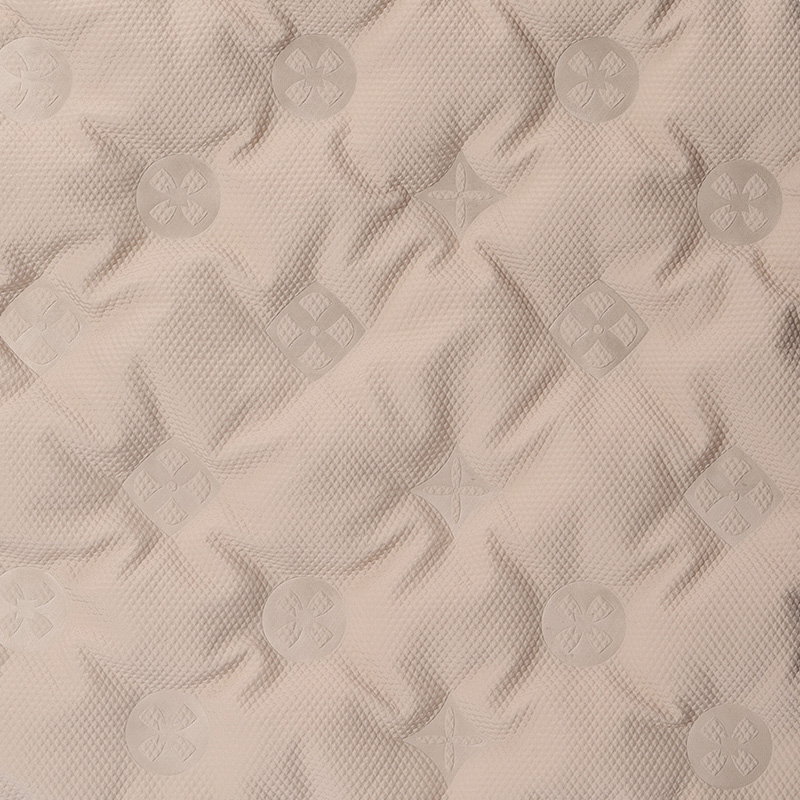 100% Polyester 3D Channel Down Jacket FabricA down-proof polyester fabric with built-in 3D channels for direct down filling, offered in thousands of patterns for quilt-free, shaped down jackets.View Product →
Our 3D channel down jacket fabric, developed since 2018 and now available in more than 3,000 patterns, sidesteps part of the debate by building the channels into the fabric itself. It removes a sewing step, reduces down migration at the seams and gives the garment a more sculpted look. Most of these articles are polyester-based, and in our experience the structure contributes more to warmth retention and shape retention than the choice between polymer families.
Cost, Availability and Sustainability
At the fiber level, nylon typically costs more, and the gap widens in fine deniers and specialty variants. Polyester has the deeper and more stable supply base, which matters when you are planning a three-season programme and cannot absorb a price spike mid-season.
On sustainability, recycled polyester is mature, widely certified and available in volume, while recycled and bio-based nylon remains scarcer and pricier. Both fibers shed microfibers during washing, so the more meaningful levers are usually construction, dyeing efficiency and the lamination process. Solvent-free PUR lamination, which we run across our lines, removes a solvent stream from the equation regardless of whether the face fabric is nylon or polyester.
Questions Worth Asking Before You Commit
- What is the target weight, and can the chosen fiber hit it without feeling fragile?
- Which membrane or coating will sit behind the face, and has adhesion been tested on this specific substrate?
- How will the jacket be washed, and does the DWR survive that cycle count?
- Does the colour standard demand the depth only nylon reliably delivers?
- Is recycled content a hard requirement or a nice-to-have, and does the certificate cover the whole laminate?
Our Take
After fifteen years of coating and laminating both fibers, we have stopped thinking of this as a rivalry. Nylon earns its place in light, strong, beautifully coloured shells. Polyester earns its place in durable, dry-feeling, cost-predictable jackets that ship on schedule. The mills that serve buyers well are the ones honest enough to say which is which for a given brief.
If you are weighing the two for an upcoming season, send us your specification and your target price. We will tell you plainly which fiber we would run, which film we would pair with it, and where the risk sits. You can reach the team through our contact page, and samples usually leave Suzhou within a few days.