
 English
 CN
CNContent
The first decision point when sourcing lightweight fabric for performance outerwear is not the fabric itself—it’s the end‑use demand: packable volume, tensile strength, and waterproof integrity. A textile that weighs under 170 g/m² (GSM) or 5 oz/yd² can meet these requirements when you control fiber selection, weave structure, and lamination technology. What follows is a practical decision framework for product managers, outdoor gear developers, and sourcing professionals who need repeatable lightweight performance.
What Is Light Weight Fabric?
Light weight fabric is defined by mass per unit area. The most universal metric is grams per square meter (GSM). Fabrics below 170 GSM are generally considered lightweight; ultra‑light constructions can fall as low as 15–30 GSM. In filament‑based textiles, denier—the weight in grams per 9,000 meters of a single yarn—offers a parallel reference. Finer yarns (7D–40D) produce extremely light base cloths without sacrificing coverage.
GSM and denier are related but not interchangeable. A low‑denier yarn knit or woven into a tight, multi‑filament construction can yield a higher GSM than expected, while a coarse yarn in an open structure can produce a low GSM with an entirely different hand feel. For procurement, specifying both tolerances prevents misunderstanding. For a deeper look at that relationship, understanding GSM and microfiber clarifies how weight interacts with fiber type and fabric engineering.
Top Light Weight Fabric Types for Performance and Outdoor Use
| Fabric Category | Typical GSM Range | Key Performance Attribute | Common Gear Application |
|---|---|---|---|
| Polyester Ripstop | 40–100 | Tear resistance from grid reinforcement | Ultralight shells, tent flysheets |
| Nylon Taffeta & Pongee | 30–70 | Dense weave, wind resistance | Jacket linings, inner tent canopies |
| Coated / Laminated | 50–150 (base fabric) | Waterproof with controlled breathability | Rainwear, technical jackets |
| Lightweight Oxford | 150–250 | Abrasion resistance at lower weight | Daypacks, lightweight luggage |
Polyester Ripstop
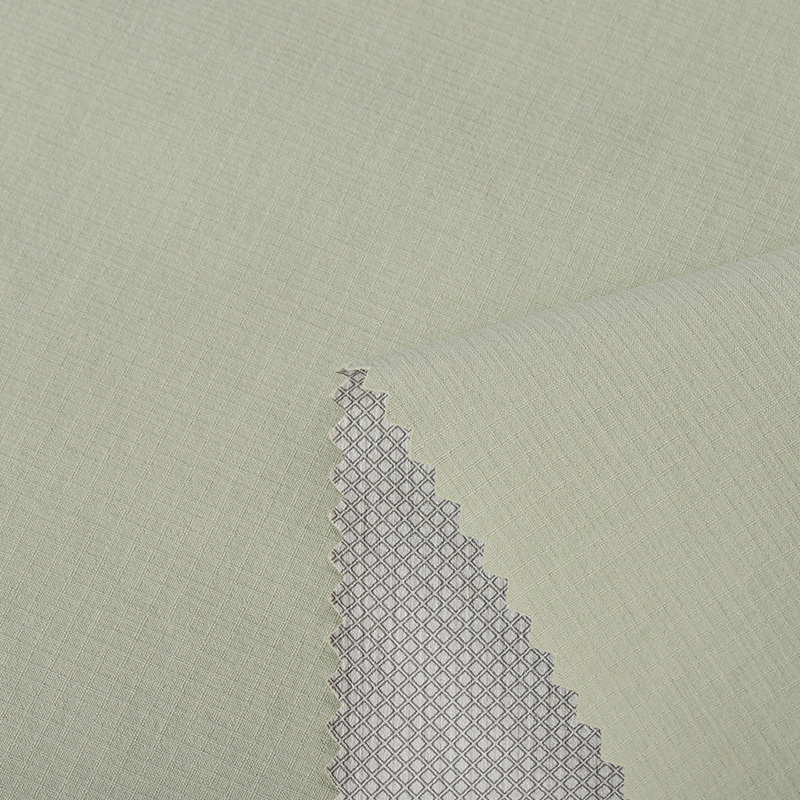
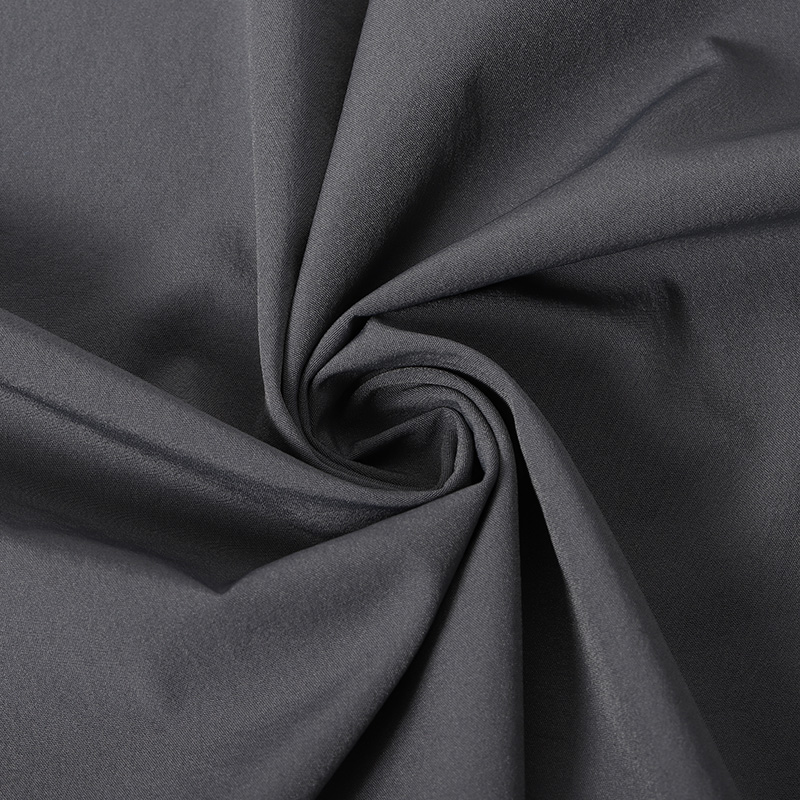
Polyester ripstop earns its place as the default choice for ultralight outdoor gear because the reinforcement grid limits tear propagation without adding meaningful weight. The base fabric can be as light as 40 GSM, and when combined with a PU or TPU backside coating it reaches reliable hydrostatic head values while staying under 120 GSM. Ripstop polyester pongee fabric specifications detail how the pongee variant balances a smooth hand with high tenacity, making it suitable for packable windbreakers and sleeping bag shells.
Nylon Taffeta & Pongee
Nylon taffeta and pongee provide a very dense, smooth surface at minimal weight. With uncoated versions weighing as little as 30 GSM, they are prized for internal linings and pressure‑point reinforcements where wind‑blocking and low friction matter more than waterproofness. Pongee’s slightly textured face adds a degree of visual depth without compromising the fabric’s low‑mass advantage.
Coated & Laminated Light Weight Fabrics
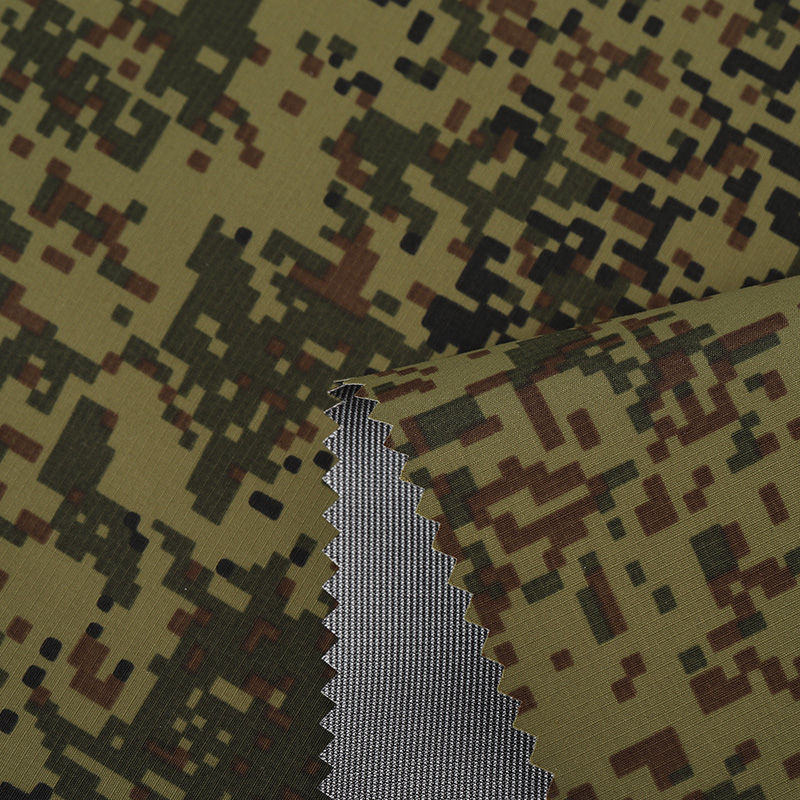
Applying a PU or TPU film to a lightweight base fabric creates a waterproof barrier while retaining the original textile’s low bulk. The critical factor is the lamination process: solvent‑free PUR lamination yields consistent peel strength without stiffening the cloth. For a complete selection framework, how to choose waterproof fabric offers a checklist that covers coating weight, MVTR, and compatibility with seam tape. Selecting a coating that adds less than 20 g/m² while maintaining a 10,000 mm water column is the benchmark for premium light‑weight waterproofs.
Explore our lightweight fabric range to see how dyeing, coating, and laminating are combined on a single platform for minimal lead time.
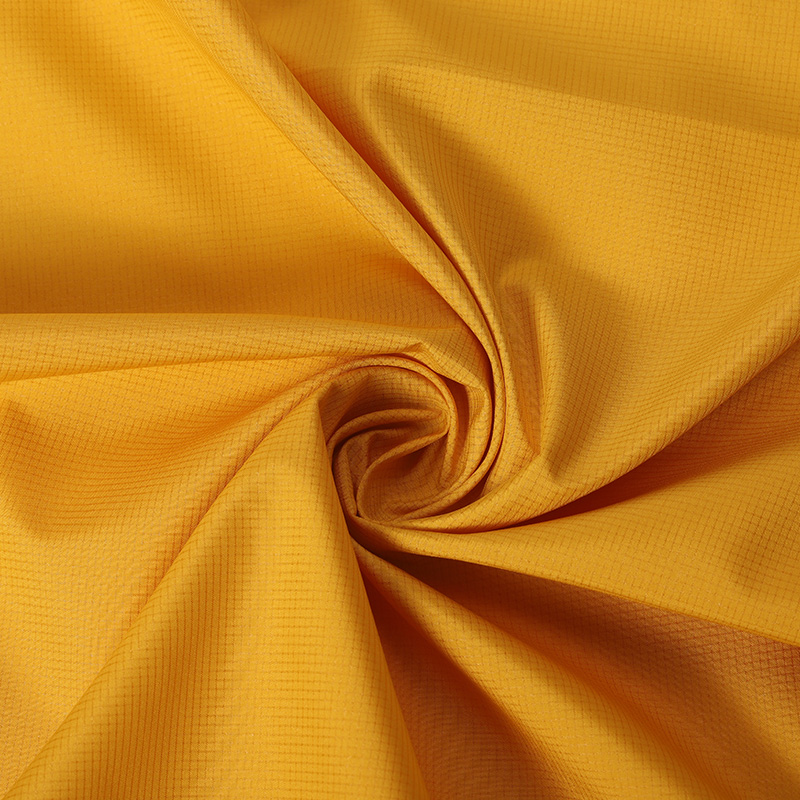 Ripstop Polyester Pongee/Spandex Fabrics Manufacturers, FactoryAs China OEM Ripstop Polyester Pongee Fabrics Manufacturers, Factory, Wujiang Fuhuang Wholesale Jacquard Polyester Taffeta Fabrics,Taslan...View Product →
Key Performance Tests for Light Weight Fabrics
Because lightweight fabrics push the lower boundary of mass, they require rigorous verification of mechanical strength. Three tests separate materials that will survive a season from those that will fail on the first sharp rock:
- Tear strength (ASTM D2261 or ISO 13937‑2): For a 40 GSM ripstop, a minimum warp tear of 15 N is a practical floor. Un‑reinforced fabrics at the same weight can tear below 5 N.
- Hydrostatic head (ISO 811): A 10,000 mm rating is the accepted entry point for sustained rain. Lightweight laminates can achieve this with a 15 µm TPU film, but the lamination bond must be uniform.
- Moisture vapor transmission rate (MVTR, JIS L 1099 B1): A target of 8,000 g/m²/24h prevents internal condensation during activity, which is especially important in a lightweight shell that sits close to the body.
A common procurement mistake is sacrificing tear strength for a lower gram weight. Demanding both a low GSM and a meaningful tear strength forces the selection of filament yarns with high tenacity and, where necessary, a grid or film reinforcement.
How to Source Light Weight Fabric from a Functional Textile Manufacturer
Sourcing lightweight fabric for technical applications is not a commodity purchase. You are buying lamination engineering, quality consistency, and the capacity to scale. Three supplier attributes directly reduce your risk:
- In‑house lamination capability: Control over bonding prevents delamination, which is the primary field failure in lightweight waterproof fabrics. PUR lines are preferred for their strong, flexible bonds.
- Daily output capacity: Volumes must match brand order sizes. A facility processing 200,000 meters per day can handle seasonal peaks without subcontracting.
- Customization and ODM support: The ability to develop custom colorways, print patterns, and branded logo textiles shortens development cycles.
Fuhuang Textile operates 20 PUR lamination machines and maintains a daily production capacity of 200,000 meters, backed by 15 years of focused composite fabric experience. The in‑house dyeing, coating, and laminating workflow eliminates hand‑off delays and keeps lot‑to‑lot variance tight. Learn more about our light weight fabric collection and the ODM services available for performance outerwear brands.
Ripstop Polyester Pongee/Spandex Fabrics Manufacturers, FactoryAs China OEM Ripstop Polyester Pongee Fabrics Manufacturers, Factory, Wujiang Fuhuang Wholesale Jacquard Polyester Taffeta Fabrics,Taslan...View Product →Light Weight Fabric Applications in Outdoor Gear
- Ultralight rain jackets and windbreakers: 40D–70D polyester or nylon base fabric with a PU or TPU laminate achieves sub‑200 g total garment weight while passing a 10,000 mm waterproof test.
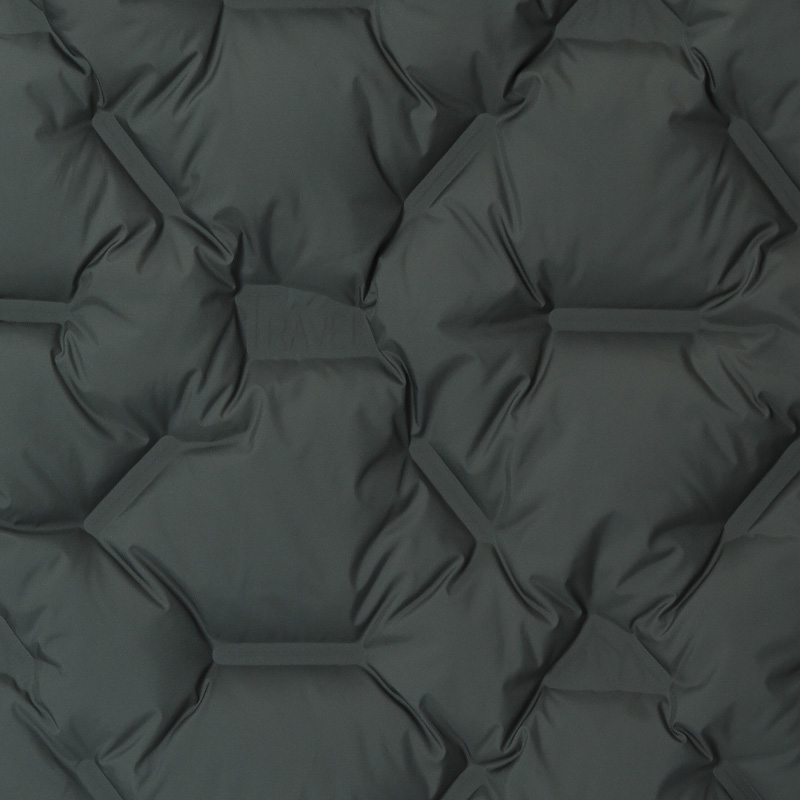
- Lightweight down jackets: Outer shell fabrics at 15D–30D paired with a down‑proof weave prevent fill migration. 3D‑channel constructions further distribute insulation without adding heavy baffle linings.
- Ultralight tents and bivy bags: Silicone‑coated polyester ripstop or PU‑coated nylon at 20D–30D balances tear strength and pack size; floor fabrics may step up to 70D for puncture protection.
- Backpacks and travel gear: Lightweight oxford fabrics in 210D–420D offer surface abrasion resistance without the bulk of traditional 600D, making them suitable for packable daypacks and compression bags.