
 English
 CN
CNContent
A rain shell that beaded water crisply in March can feel like a different garment by September. The shoulders darken within the first minutes of drizzle, the fabric gains weight, and moisture seems to press through in sustained rain. In most cases the waterproof layer inside has not failed. What has worn away is the durable water repellent, or DWR: the factory-applied finish on the outer face of a fabric that makes water gather into beads and roll off instead of soaking into the weave. Knowing what DWR is, why it degrades, and how it interacts with the waterproof layers beneath it matters twice over, because it shapes how users care for a finished garment and what a buyer should specify before committing to a production run.
What a Durable Water Repellent Finish Actually Does
DWR is a hydrophobic treatment applied to the outer surface of a fabric during finishing. It works by lowering the surface energy of the fibers. Untreated fibers attract water, so rain spreads into the yarns. A durable water repellent changes that surface chemistry: water cannot spread across it, so surface tension pulls the liquid into tight beads that sit on top of the fabric and roll away with movement or gravity.
Three distinctions come up constantly in sourcing conversations. First, DWR is a surface treatment, not a barrier; under enough water pressure, liquid will still pass through the weave itself. Second, the waterproofing job belongs to the membrane or coating bonded to the fabric, not to the repellent finish. Third, durability is part of the definition: an after-market spray can make almost any fabric bead water for a few wears, while a true DWR is engineered to survive repeated laundering, flexing, and abrasion over the working life of the textile.
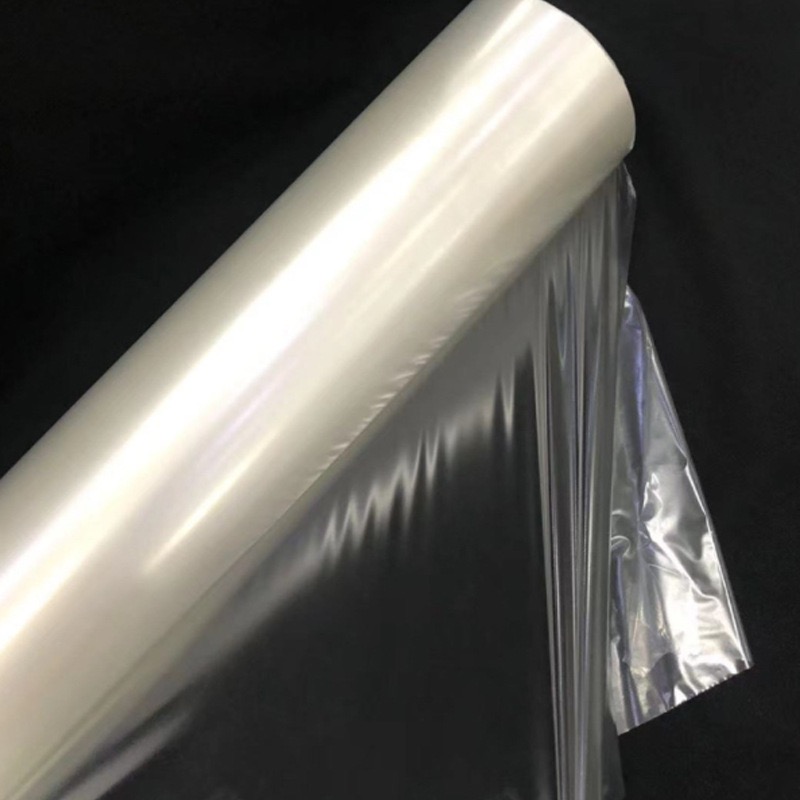
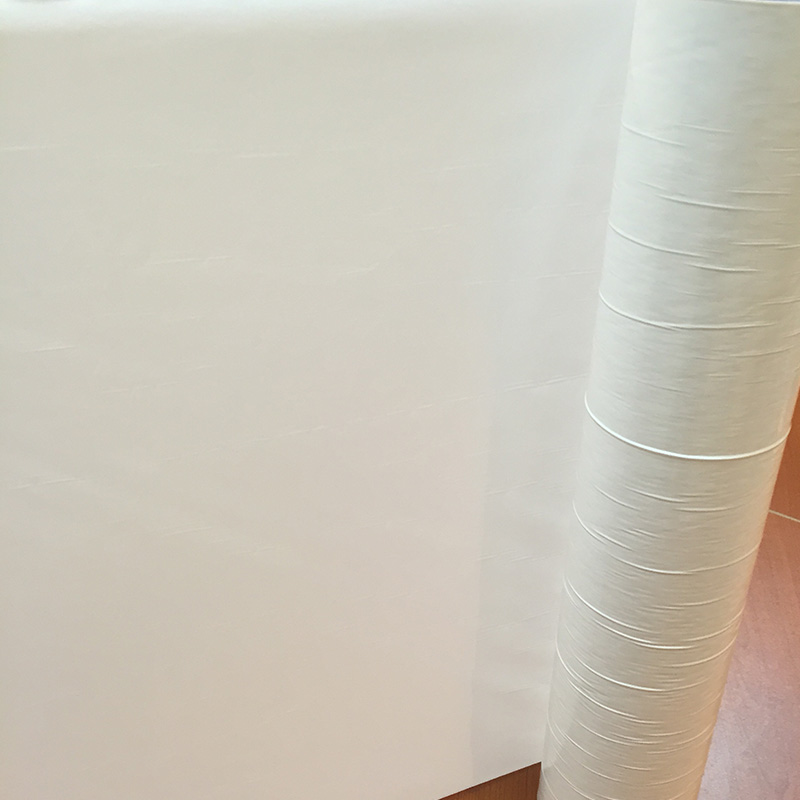 TPU, PU, PTFE and TPEE Blackout MembranesA range of waterproof membrane materials offered as film or laminate bases. As the surrounding discussion of DWR, barrier layers and PFAS-free chemistry shows, asking suppliers about membrane type is a key first step.View Product →
That membrane layer, whether supplied as film stock or as pre-bonded fabric, is what stops liquid water while letting perspiration vapor escape; the DWR simply protects the system from the outside in. The chemistry itself has moved through three generations, from long-chain fluorocarbons to shorter-chain fluorocarbons and now to PFAS-free repellents built on waxes, silicones, and branched hydrocarbons. Driven by tightening regulation of PFAS substances, that shift is now one of the first questions a serious buyer should put to any supplier.
How DWR Works Within Laminated Waterproof Fabric
In a laminated construction, the membrane and the DWR do two different jobs that only deliver full performance as a pair. The membrane is the barrier between weather and body. The DWR keeps the face fabric dry so the whole system can breathe. When the finish is intact, rain beads off and perspiration vapor passes outward easily. When it fails, the face fabric wets out: it absorbs water, blocks vapor transfer, adds weight, and produces the cold, clammy feeling that users very often misread as leakage.
Construction choice shapes how badly wet-out affects comfort. In a two-layer laminate, the membrane is bonded to the face fabric and a separate liner hangs inside to protect it, which keeps weight and cost down but leaves a slightly bulkier hand. In a three-layer laminate, the membrane is sandwiched directly between the face fabric and a bonded backer, producing a single technical layer with less bulk and faster moisture transfer. Both depend on the outer finish to keep the face fabric working, because neither can compensate for a soaked outer surface for long.
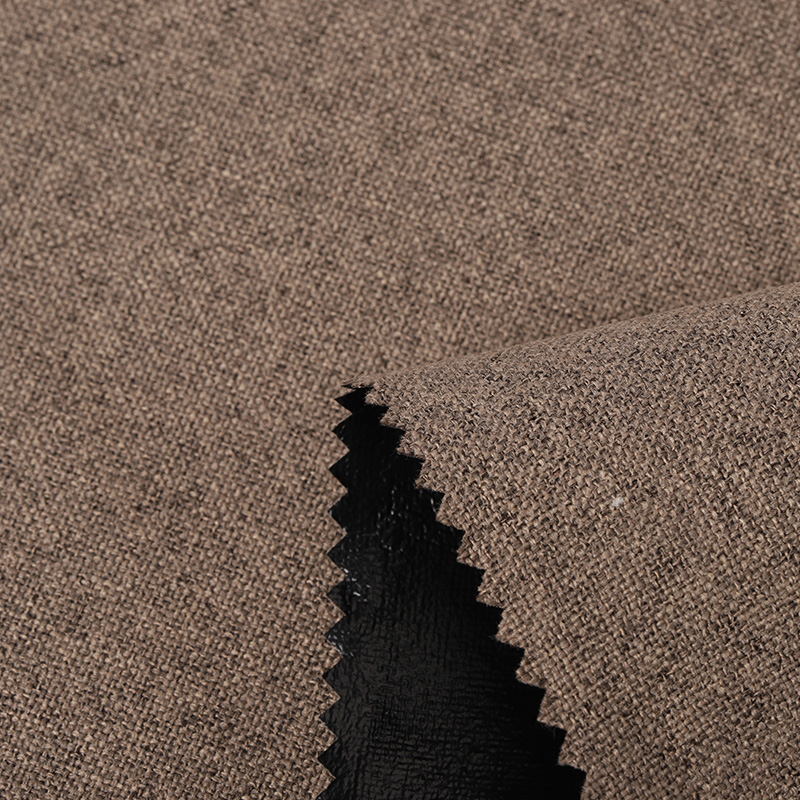 Two-Layer Outdoor Functional Waterproof FabricsTwo-layer laminates bond the membrane to the face fabric with a separate hanging liner, keeping weight and cost down. This category suits buyers comparing constructions before committing to a heavier three-layer system.View Product →
  Three-Layer TPU Film Softshell Waterproof FabricsThree-layer laminates sandwich the TPU film between face fabric and bonded backer, cutting bulk and speeding moisture transfer. Ideal when wet-out resistance and comfort matter more than minimum weight or cost.View Product →
The practical differences between the two constructions, including how each behaves once a face fabric starts to wet out, are laid out in more detail in our 2-layer vs 3-layer waterproof fabric buying guide.
Why DWR Wears Off and How to Bring It Back
DWR rarely disappears all at once; it degrades through a handful of predictable mechanisms. Dirt, body oils, and sunscreen give water something to cling to, which is why collars, cuffs, and shoulder panels lose beading first. Detergent residue and fabric softener leave hydrophilic films on the surface. Abrasion from pack straps and repeated flexing physically removes the finish, and every wash cycle depletes a little more of the chemistry.
The useful part of this knowledge is that much of what looks like dead DWR is only contaminated. Cleaning often restores beading on its own, and heat does the rest, because most durable water repellent finishes are designed so their polymer chains reorient and rebuild surface structure when warmed. The sequence below recovers beading in most cases without any reproofing product.
A Practical Recovery Sequence
- Wash the garment according to its care label with a technical cleaner or a small dose of mild detergent, and never use fabric softener.
- Rinse thoroughly so no detergent film remains on the face fabric.
- While the garment is still damp, apply moderate heat, such as a low-temperature tumble dry or a cool iron behind a cloth, to reactivate the finish.
- Mist the surface with water. If it still spreads instead of beading, reapply a wash-in or spray-on reproofing product suited to the fabric type.
- Let the treatment cure fully before storing, and avoid long-term compression in stuff sacks or packed luggage.
One caution belongs in every care conversation: a finish that no longer recovers after cleaning and reproofing does not automatically mean the garment is finished. The membrane underneath may still be fully waterproof. Restoring the surface is as much about breathability and comfort as it is about water shedding.
How DWR Performance Is Tested and Specified
The industry yardstick is the spray test defined under ISO 4920 and its AATCC equivalent. Water is sprayed onto a taut fabric sample under controlled conditions, and the wetting pattern is rated from 0 to 100, where 90 or above indicates strong, uniform beading. The number that matters in procurement, however, is the retained rating after a defined number of laundering cycles, because that predicts field behavior far better than a fresh-from-the-lab figure.
PFAS-free chemistry adds a second dimension to evaluation. The newer wax- and hydrocarbon-based repellents reach respectable water ratings, but they generally repel oils less effectively than fluorocarbon chemistry and can deplete faster on some constructions. Regulatory direction has made the shift unavoidable, which is exactly why buyers should ask for comparative test data rather than accepting a marketing claim. To see how surface repellency relates to the numbers behind the barrier itself, our guide on how to evaluate the real waterproof rating of outdoor fabrics covers the distinction.
The table below summarizes the chemistry families and the trade-offs that typically matter at the negotiating table.
| Chemistry Family | Water Repellency | Oil Repellency | Wash Durability | Key Buyer Considerations |
|---|---|---|---|---|
| Long-chain fluorocarbon (C8-based) | Excellent | Excellent | High | Largely phased out under environmental and regulatory pressure; rarely available for new production. |
| Short-chain fluorocarbon (C6-based) | Very good | Moderate | Moderate to high | Still widely used, but restricted in a growing number of markets; confirm compliance before ordering. |
| PFAS-free (wax, silicone, hydrocarbon based) | Good to very good | Limited | Varies by formulation | The current direction of the industry; verify retained spray ratings after washing and lamination compatibility. |
What to Put in Writing Before You Order
Because DWR is invisible once a shipment arrives, it is an easy specification point to leave vague and a common source of disputes between brand and mill. Pinning down a few items costs little and prevents most of them:
- The named chemistry family and its PFAS status, including compliance in the destination market.
- An initial spray rating target, typically 90 out of 100 or above.
- A retained rating after an agreed number of wash cycles, verified by lab reports.
- The stage at which the finish is applied relative to lamination, since bonding heat and pressure can affect some repellents.
- Care labeling that matches the finish's heat-activation requirements, so end users do not deactivate it unknowingly.
Suppliers who run their own lamination lines can usually test the finished laminate rather than the face fabric alone, and that is the only version of the data that reflects what a garment will actually experience in use. Asking for that distinction tends to separate mills that control their process from mills that simply pass materials through.
Properly understood, a durable water repellent finish is neither magic nor a marketing line. It is a working component of a waterproof system that lives on the surface, absorbs daily abuse, and responds well to cleaning and heat. End users can bring most tired jackets back with a proper wash and a low tumble dry. Buyers should give DWR the same precision in a specification as membrane type and hydrostatic head, because in the field the beading on the outside is the first thing a customer judges.